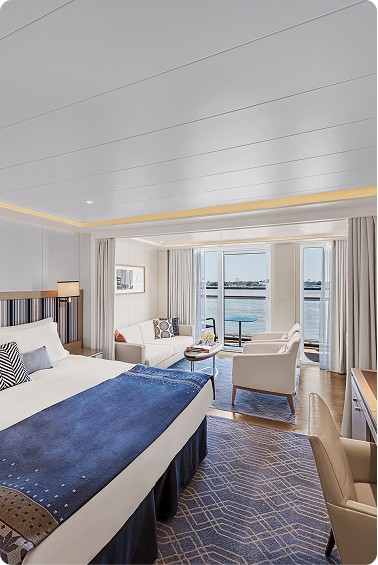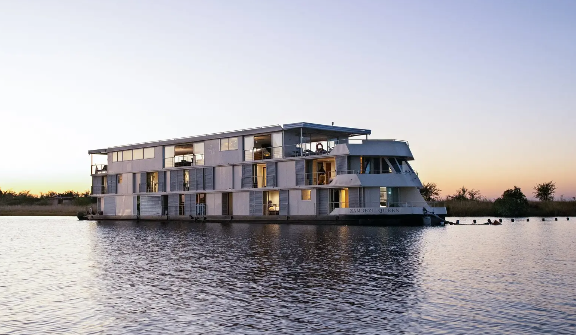

Zambezi Queen turns the traditional idea of river cruising into a floating safari. Instead of passing European cities, vineyards, and castles, the ship follows the wildlife-rich Chobe River along the border of Botswana and Namibia. Elephants often gather near the water, hippos surface beside the ship, and birds fill the riverbanks, allowing guests to observe the region’s wildlife from a quieter perspective than a conventional game drive. The vessel measures just 150 feet and accommodates only 28 guests across 14 staterooms, supported by a crew of 22. That small scale creates an experience closer to an intimate safari lodge than a standard cruise ship. Each accommodation is designed to keep the surrounding landscape visible, with private balcony space that lets guests watch the river and wildlife without leaving their room. The limited guest capacity also allows shore activities, meals, and wildlife outings to feel highly personal.
Public spaces are concentrated around the areas guests use most during a Chobe River journey. The upper deck includes a restaurant, lounge, bar, and pool area, while large windows maintain an open connection to the scenery. Meals, drinks, wildlife briefings, and conversation naturally become part of the same shared setting. Rather than filling the vessel with numerous entertainment venues, the design gives priority to panoramic views and comfortable observation areas. Daily activities move beyond sightseeing from the deck. AmaWaterways’ African itineraries may include small-boat safaris, open-air game drives in Chobe National Park, birdwatching, fishing, and visits to riverside communities. Guests return between outings for meals and time onboard, making Zambezi Queen both transportation and a base camp for exploring the region.
What separates Zambezi Queen from the rest of the AmaWaterways fleet is that the ship is inseparable from the safari experience. Its size, balcony accommodations, panoramic public spaces, and slow movement along the Chobe are all intended to improve wildlife viewing. The result is not simply a river cruise in Africa, but a journey where the river itself becomes the main observation route through one of the continent’s most active wildlife regions.

 Zambezi Queen



 Mange your Bookings