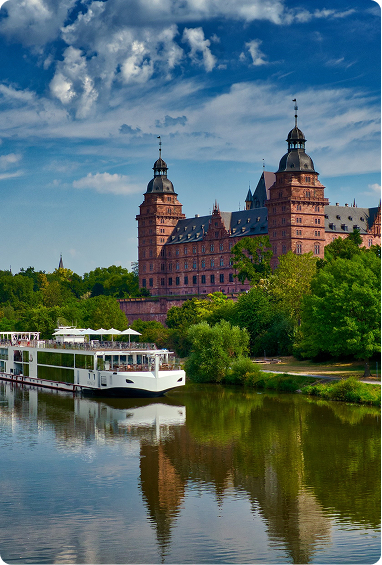

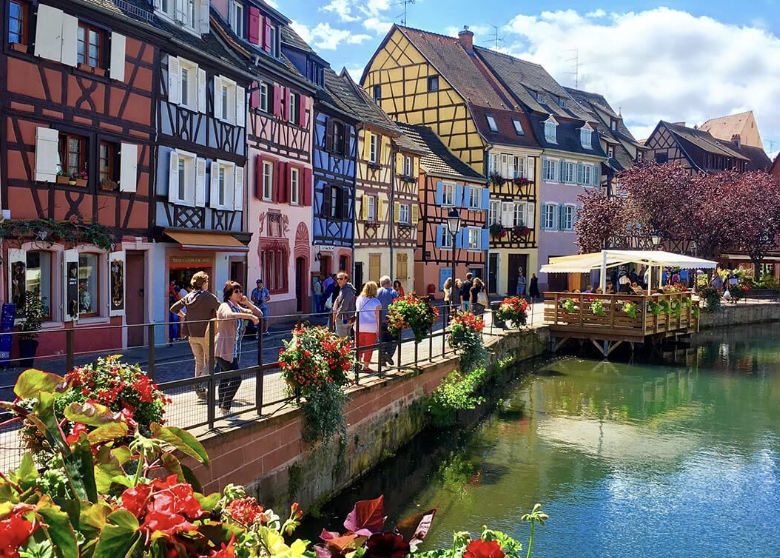
Rather than following a single river from beginning to end, Viking Idi is especially well suited to journeys that combine several waterways and cultural regions into one continuous experience. Her current itineraries include routes linking Paris with Zürich or Prague, along with journeys through the Main and Moselle regions. This gives Idi a character shaped by variety: French influences can give way to German wine country, medieval communities, historic trading cities, and landscapes that change noticeably as the voyage progresses.
Idi joined the Viking fleet in 2014 and carries 190 guests in 95 outside staterooms. At 443 feet long, she follows Viking’s recognizable Longship design, combining the narrow dimensions required for European river navigation with an interior that feels bright and surprisingly open. Scandinavian styling keeps decoration restrained, using natural woods, neutral finishes, contemporary furnishings, and large expanses of glass to make the scenery outside the dominant visual element.
The ship’s name reaches back to Norse mythology. Idi was one of three frost-giant brothers who inherited an enormous fortune in gold from their father, Olvadi. Viking frequently draws its ship names from Norse history and mythology, and the connection gives Idi an identity of her own even though she shares the same proven architectural platform as many of her Longship sisters.
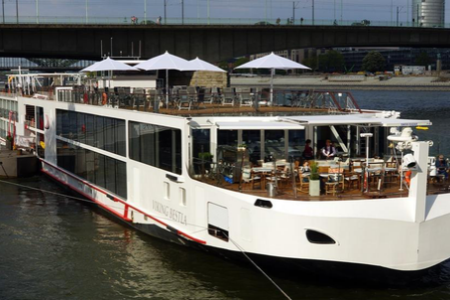
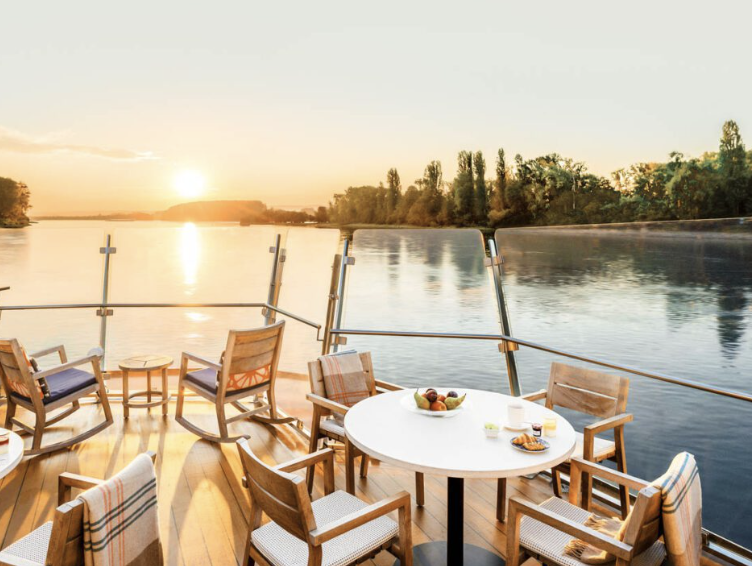
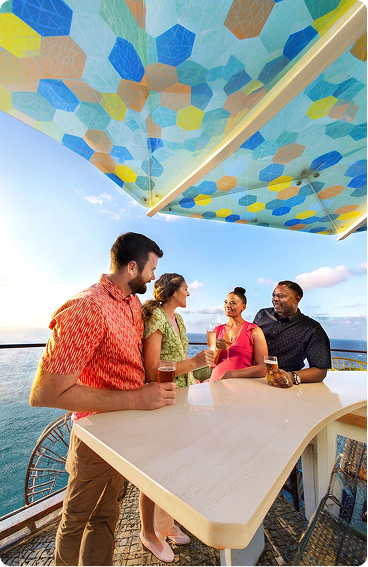
One of the best places to appreciate the journey is the Aquavit Terrace. Positioned at the bow, this indoor-outdoor space faces directly toward the river ahead and provides a casual alternative to the main Restaurant. Breakfast or lunch here can unfold alongside vineyard slopes, small communities, bridges, and approaching city skylines, allowing dining and sightseeing to become part of the same experience.
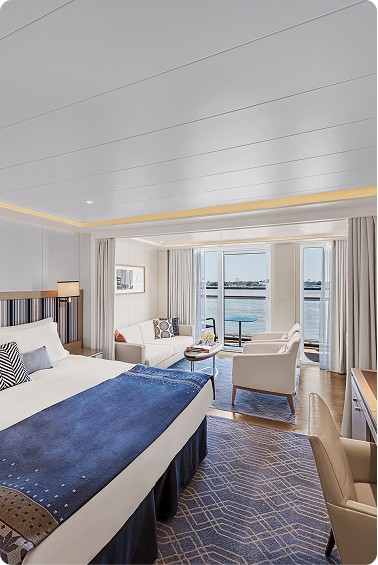
Idi’s accommodations are distributed among 25 Standard Staterooms, 22 French Balcony Staterooms, 39 Veranda Staterooms, seven Veranda Suites, and two Explorer Suites. Standard rooms measure approximately 150 square feet, while French Balcony accommodations use floor-to-ceiling sliding glass doors to maximize the connection with the river. Veranda Staterooms increase the space to approximately 205 square feet and add a full private balcony. The 275-square-foot Veranda Suites provide separate living and sleeping areas, while the 445-square-foot Explorer Suites feature wraparound verandas and approximately 270-degree views.
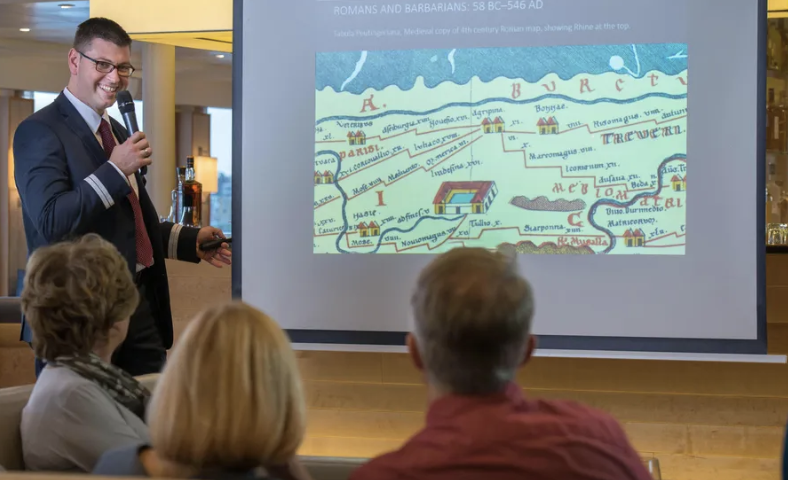
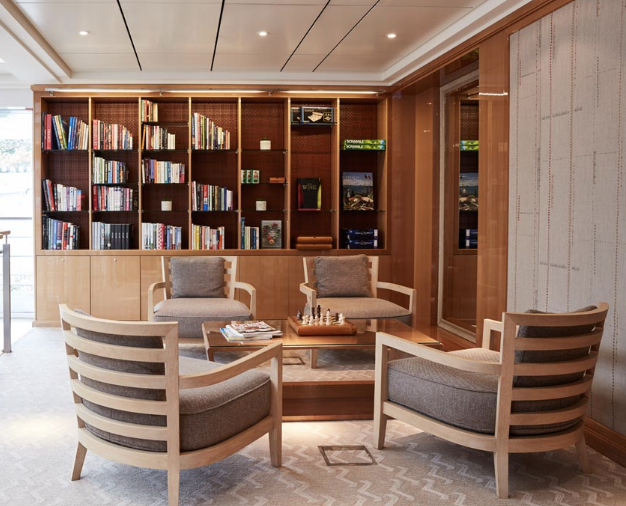
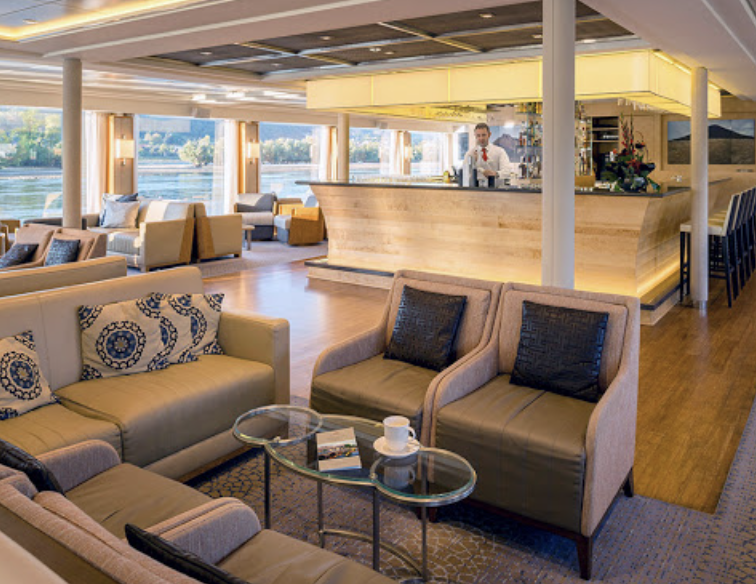
Life aboard remains deliberately uncomplicated. The Lounge and Bar serve as the principal social area, transitioning between conversation, destination presentations, cultural enrichment, and relaxed evening entertainment. A library provides a quieter retreat, while panoramic windows mean guests rarely have to disconnect completely from the surroundings when they move indoors.
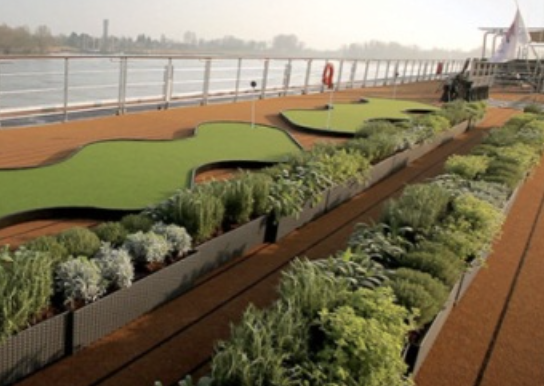
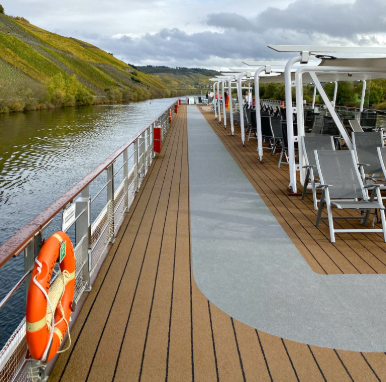
The Sun Deck offers a different perspective entirely. Its 360-degree views are particularly useful when Idi travels through the wine-producing regions of Germany, where vineyards, castle ruins, church towers, and historic communities can appear along both banks. Shaded seating provides somewhere to remain outside for longer periods, while a walking track, putting green, solar panels, and an organic herb garden make practical use of the upper deck.
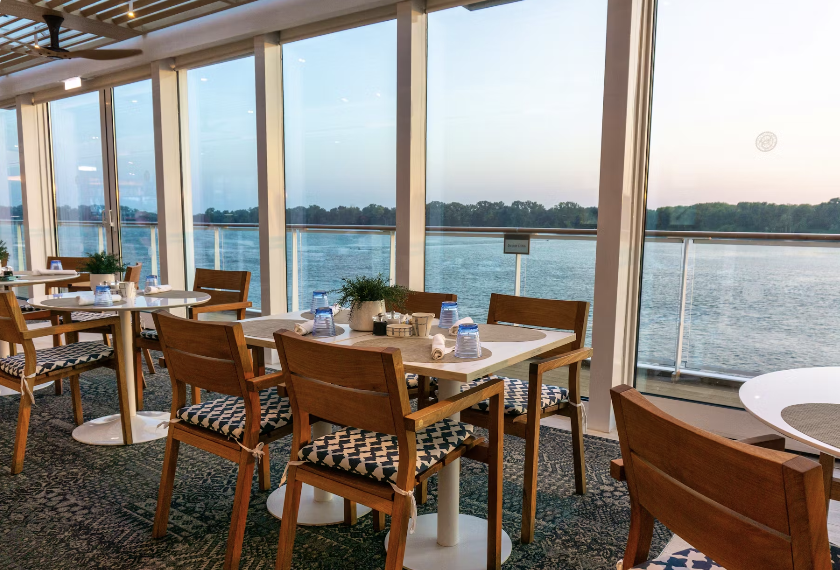
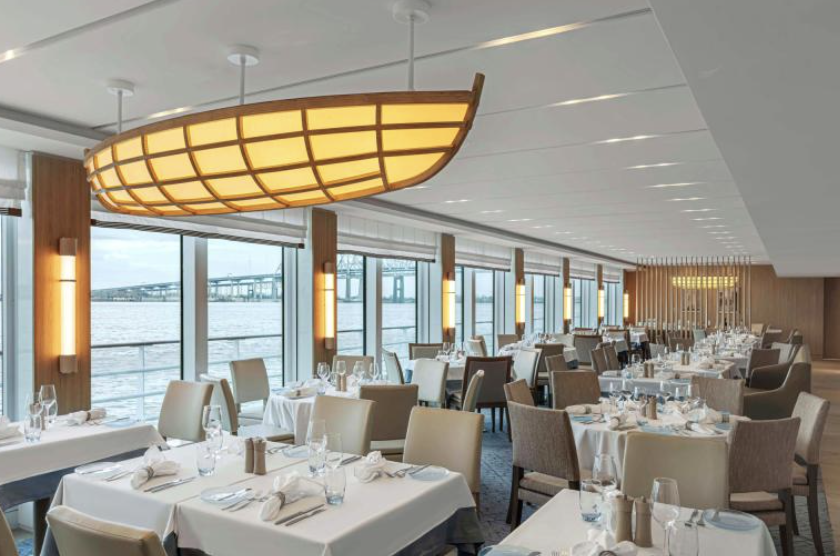
Dining in the Restaurant complements rather than interrupts the destination experience. Floor-to-ceiling windows preserve panoramic views during breakfast, lunch, and dinner, while menus can incorporate regional influences alongside familiar international selections. The relaxed atmosphere works particularly well on excursion-heavy itineraries, allowing guests to return from a day ashore without needing to prepare for a highly formal evening.
Idi’s varied deployment is ultimately one of her strongest qualities. Journeys can combine Paris with the Moselle, Main, and Rhine regions before continuing toward destinations such as Prague or Zürich. These routes broaden the experience beyond the traditional Amsterdam-to-Basel Rhine itinerary and introduce travelers to smaller communities and landscapes that receive considerably less attention than Europe’s headline cities.
For travelers who enjoy seeing how different regions connect, Idi offers an appealing interpretation of European river cruising. The ship remains comfortably familiar from day to day, but the architecture, cuisine, language, history, and scenery outside continue to evolve. Rather than making the vessel the attraction, Idi provides a thoughtfully designed place from which to experience everything happening around it.

 Viking Idi





 Mange your Bookings