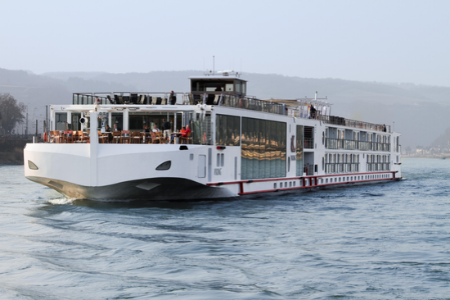

Egypt rewards travelers who understand the distance between its monuments as much as the monuments themselves. Aboard Viking Hathor, the Nile becomes the connecting thread between temples, ancient settlements, agricultural communities, and stretches of desert that have framed life along the river for thousands of years. Purpose-built specifically for Nile navigation, Hathor offers a markedly different experience from Viking’s European Longships, pairing a very small passenger count with an itinerary centered on archaeology, culture, and the landscapes of Egypt.
Introduced in 2024, Hathor accommodates only 82 guests in 41 outside staterooms. That scale creates an atmosphere closer to a boutique river hotel than a conventional cruise ship, particularly after guests return from days spent visiting archaeological sites. The vessel’s design blends the clean contemporary character associated with Viking with details suited to its Egyptian setting, creating interiors that feel modern without becoming disconnected from the destination.
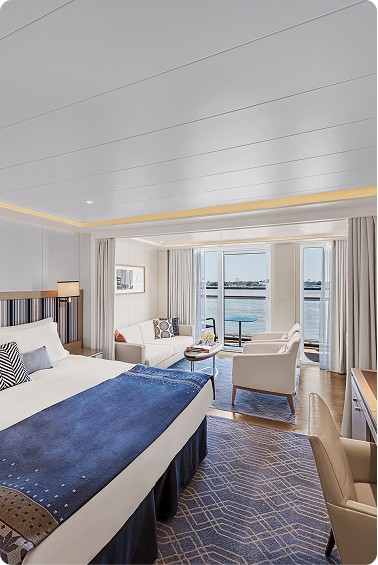
One of Hathor’s defining features is that every stateroom includes its own veranda. Rather than reserving private outdoor space for a limited number of premium categories, the design gives every guest somewhere to step outside and watch the Nile from their accommodation. Staterooms are also notably spacious for river cruising, while larger suite categories provide additional living space for travelers who want a more residential environment during the journey.
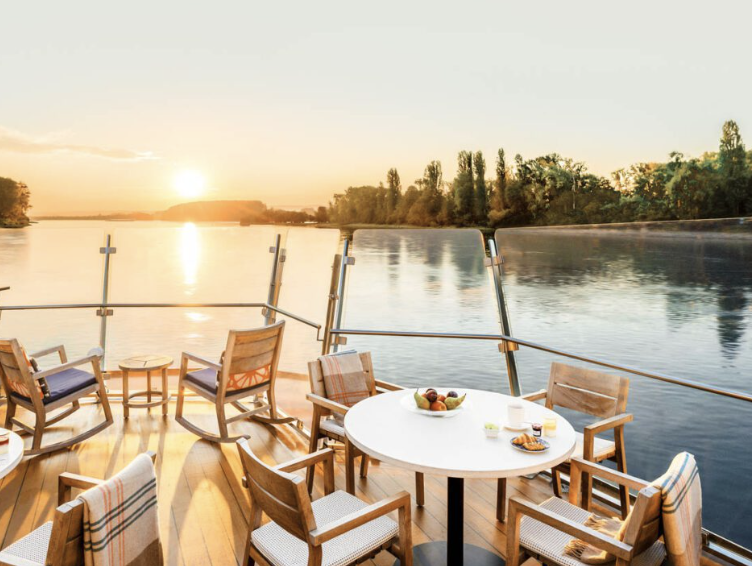
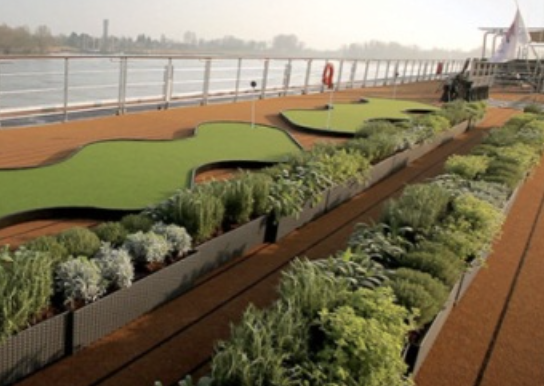
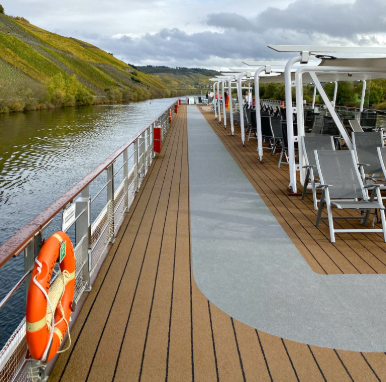
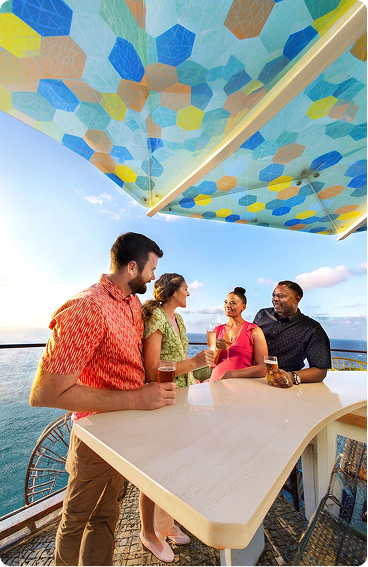
The upper deck becomes an entirely different kind of living space. A swimming pool offers a welcome retreat during warmer Egyptian afternoons, while shaded seating makes it possible to remain outdoors as the ship travels between destinations. From here, the Nile constantly changes character: densely cultivated fields and palm trees can occupy one bank while desert landscapes rise beyond them, and fishing boats or small communities provide glimpses of everyday life along the water.
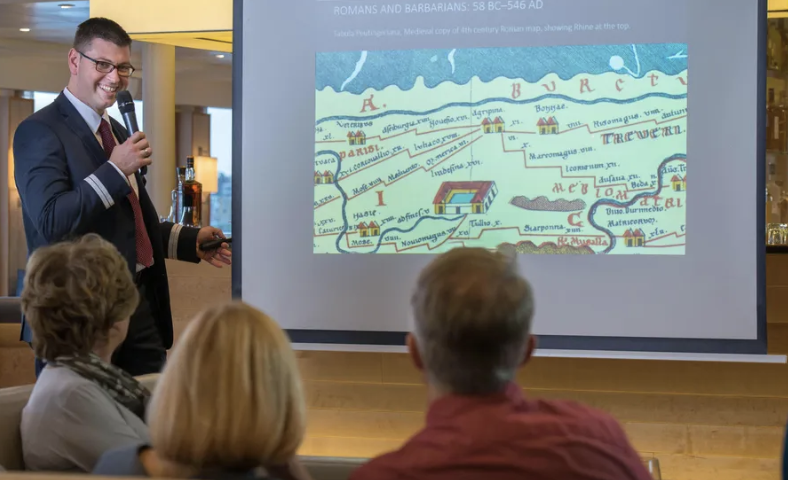
Days ashore provide the historical centerpiece. Voyages can introduce travelers to Luxor and Karnak, the tombs of the Valley of the Kings, the temples at Edfu and Esna, and other archaeological sites along the Nile. These experiences span enormous periods of Egyptian history, making onboard enrichment particularly valuable. Lectures and destination programming can provide context about dynasties, religion, architecture, archaeology, and ancient Egyptian society before guests encounter the sites themselves.
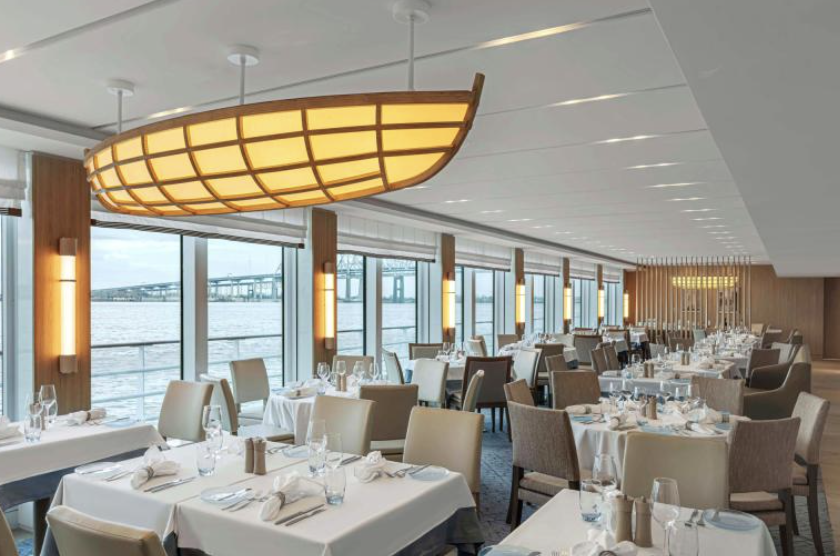
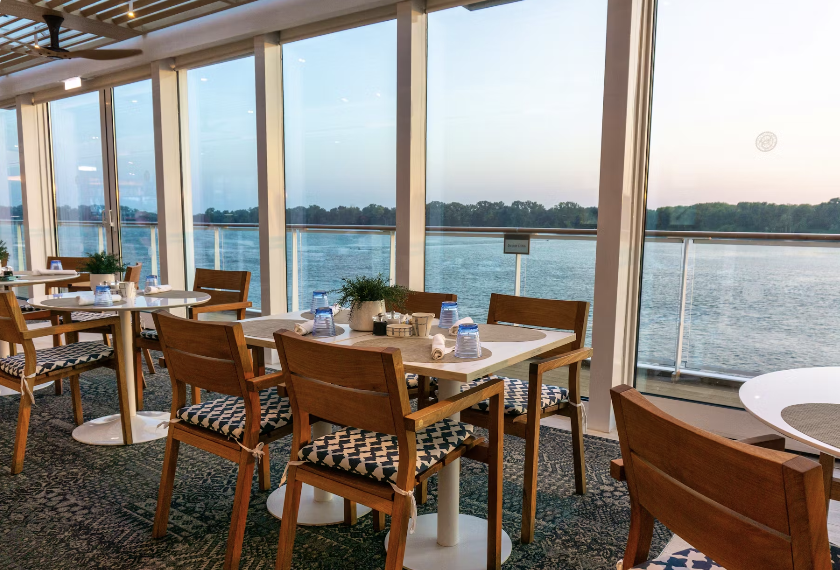
Dining aboard Hathor provides a quieter counterpoint to excursion-heavy days. Regional and Middle Eastern influences can appear alongside familiar international selections, allowing guests to continue exploring local flavors without sacrificing variety. Large windows preserve the connection with the Nile during meals, while the ship’s limited passenger capacity creates a more intimate dining environment than would be possible aboard a larger vessel.
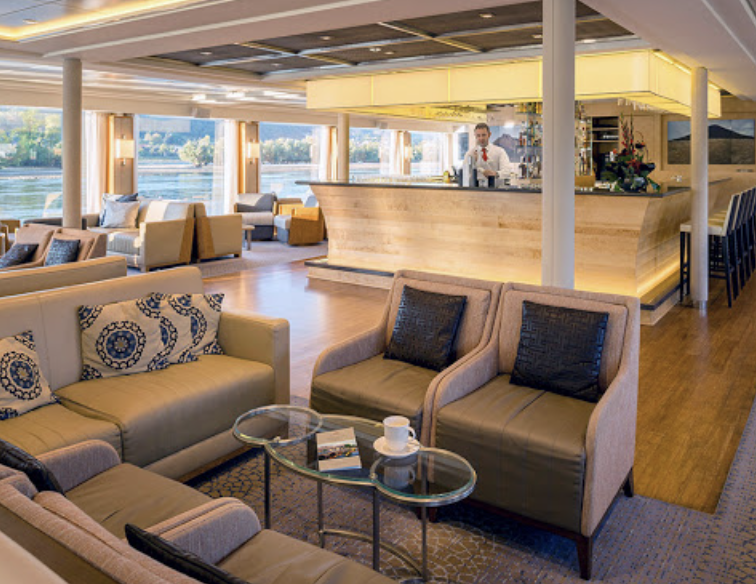
The Lounge serves several purposes throughout the voyage. During the day it offers an air-conditioned retreat from Egypt’s heat, while later it can host presentations, conversation, or relaxed gatherings after dinner. There is little need for elaborate theatrical entertainment. After spending a day among temples, tombs, museums, and archaeological landscapes, the ship is intentionally designed to provide somewhere comfortable to absorb the experience rather than immediately replace it with another attraction.
A Nile journey can also extend beyond the river itself. Time in Cairo introduces another dimension of African travel, with opportunities to experience the pyramids, museums, historic neighborhoods, and the enormous scale of modern Egypt before or after the river portion. This combination allows travelers to place the monuments encountered along the Nile within a much broader historical and cultural story.
Hathor succeeds because it feels designed for Egypt rather than simply placed there. Its intimate 82-guest capacity, all-veranda accommodations, pool deck, enrichment program, and extensive sightseeing create an experience fundamentally different from sailing the Rhine or Danube. The ship provides contemporary comfort, but the Nile remains the dominant presence—linking the landscapes of modern Egypt with some of the most extraordinary surviving monuments of the ancient world.

 Viking Hathor





 Mange your Bookings