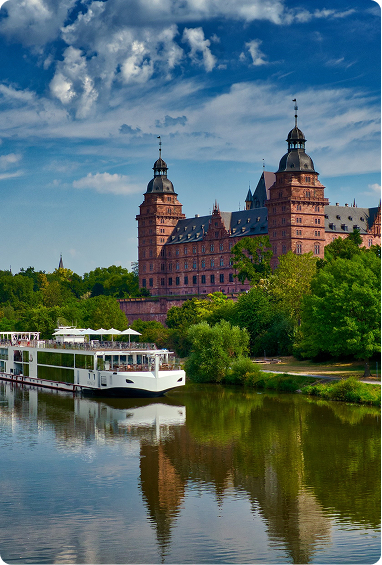

Castles appearing above steep hillsides, vineyard-covered slopes descending toward the water, and old towns gathered around church spires give the Rhine a sense of theater that is particularly well suited to river travel. Viking Eir places guests directly within that landscape, turning stretches that would otherwise be travel time into some of the voyage’s most memorable sightseeing. Routes through the Netherlands, Germany, France, and Switzerland can combine major cities with smaller communities whose history developed around the river itself.
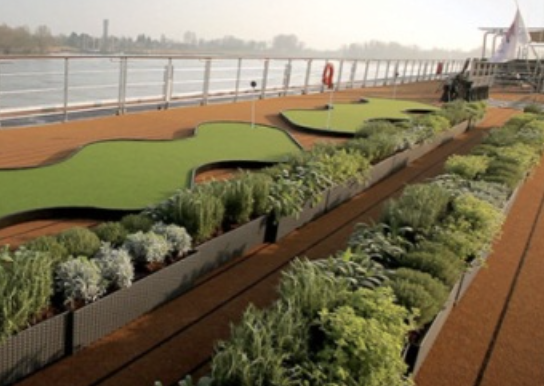
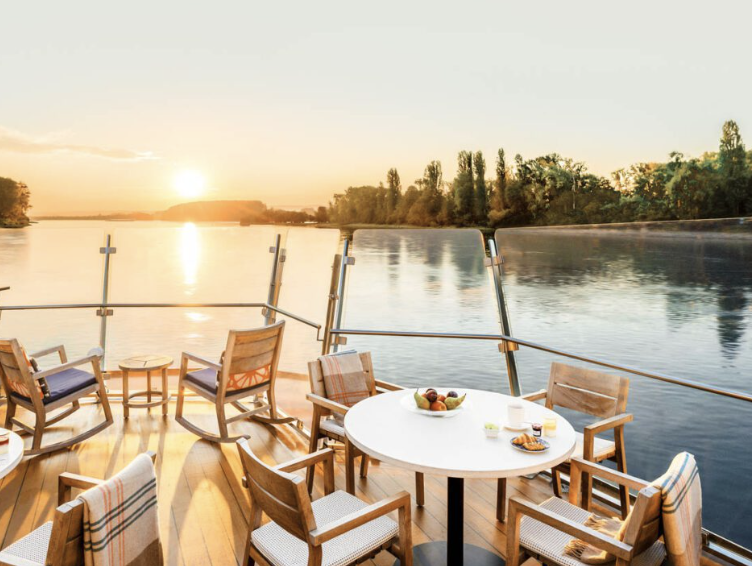
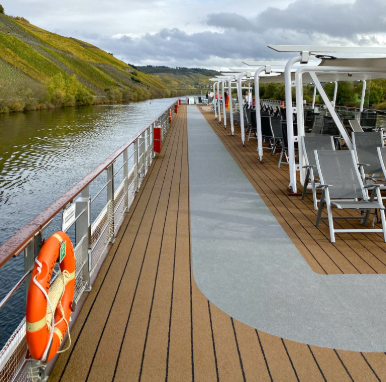
Eir’s Sun Deck is an obvious place to experience these transitions. From its elevated position, guests can remain outside as the ship approaches locks, passes beneath bridges, or enters stretches of the Rhine lined with fortresses and historic villages. The experience is less about scheduled activity than simply being present for what appears next. When weather encourages guests indoors, broad windows throughout the ship preserve much of that connection.
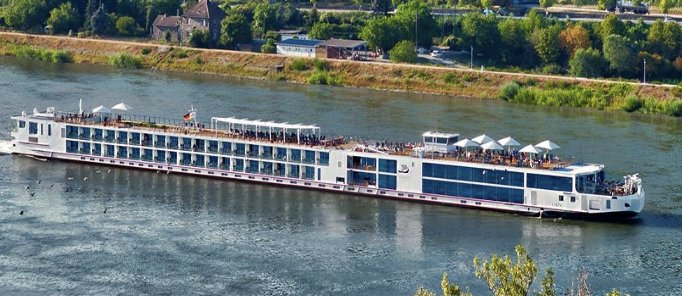
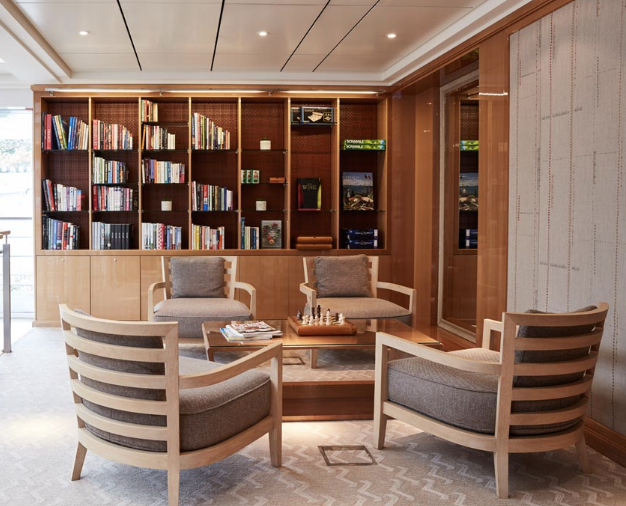
Built in 2015, Eir belongs to the 443-foot Longship family operated by Viking. The vessel accommodates 190 guests across 95 staterooms, giving it enough space for several distinct public areas without losing the intimacy expected from river cruising. Scandinavian design provides the visual foundation: pale woods, natural materials, contemporary furniture, soft colors, and an abundance of daylight create interiors that feel polished without becoming formal.
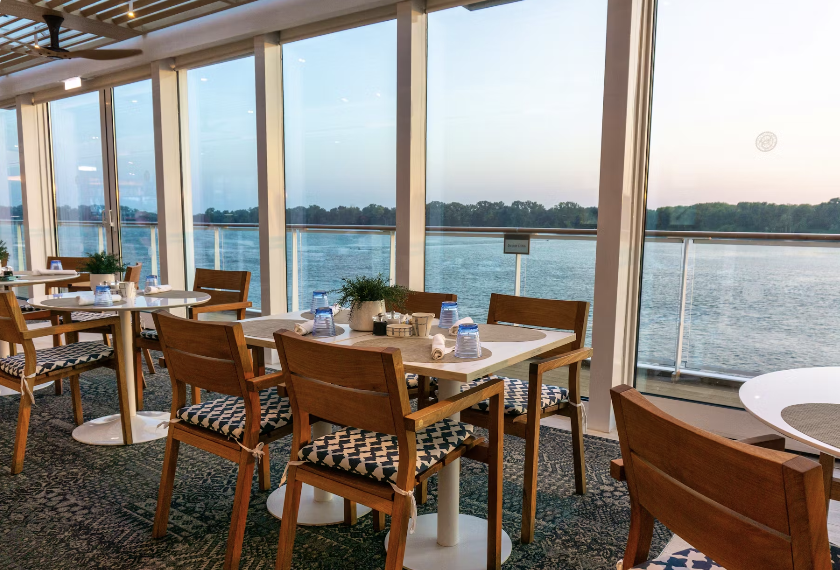
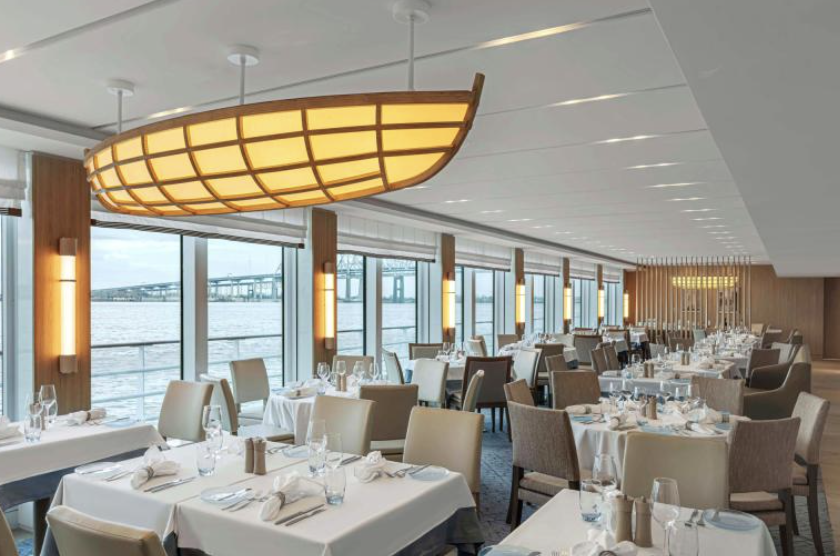
The Restaurant becomes one of the ship’s livelier gathering places at mealtimes. Breakfast, lunch, and dinner combine international choices with regional dishes inspired by the itinerary, providing another way to experience the places visited ashore. Complimentary wine, beer, and soft drinks accompany onboard lunch and dinner. Guests looking for a lighter or more casual setting can head toward the Aquavit Terrace, where indoor and outdoor seating at the front of the vessel brings meals noticeably closer to the surrounding landscape.
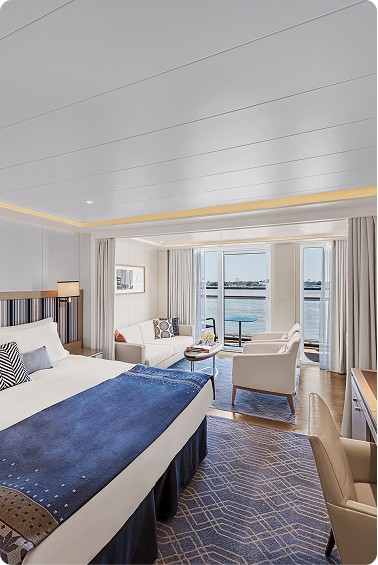
Stateroom categories offer several interpretations of riverfront living. Standard accommodations provide river-level windows and an efficient layout, while French Balcony rooms introduce floor-to-ceiling openings without sacrificing interior space to an exterior balcony. Veranda Staterooms add private outdoor seating. Veranda Suites divide the living and sleeping areas, and Explorer Suites provide the greatest amount of room along with wide-ranging views. Viking’s asymmetrical layout allows these categories to coexist within the narrow beam required for European waterways.
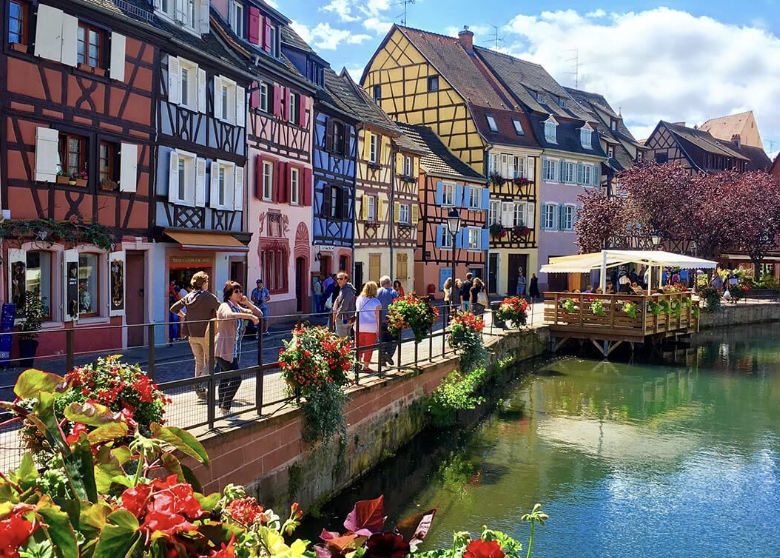
Days ashore can bring an entirely different atmosphere from one stop to the next. Amsterdam’s canals and merchant heritage contrast with Cologne’s monumental cathedral, while smaller German communities reveal half-timbered architecture, local wine traditions, and centuries-old streets. Farther south, the Rhine opens pathways toward destinations in France and Switzerland. This variety gives Eir an itinerary-driven personality even though the onboard experience remains consistently relaxed.
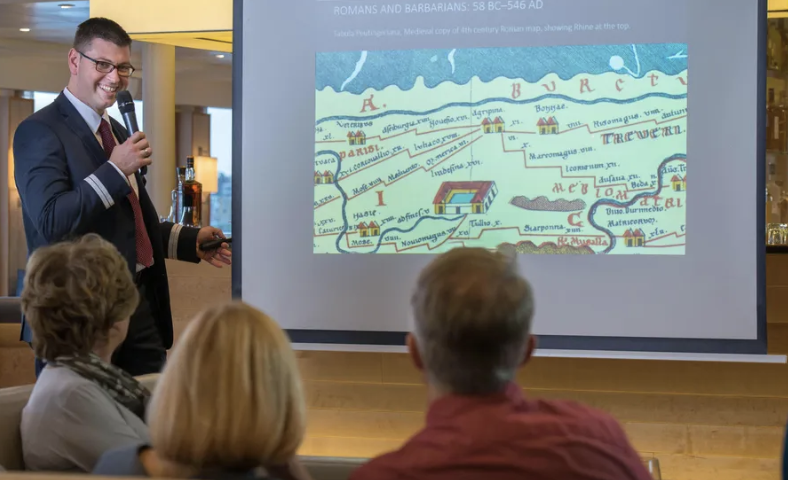
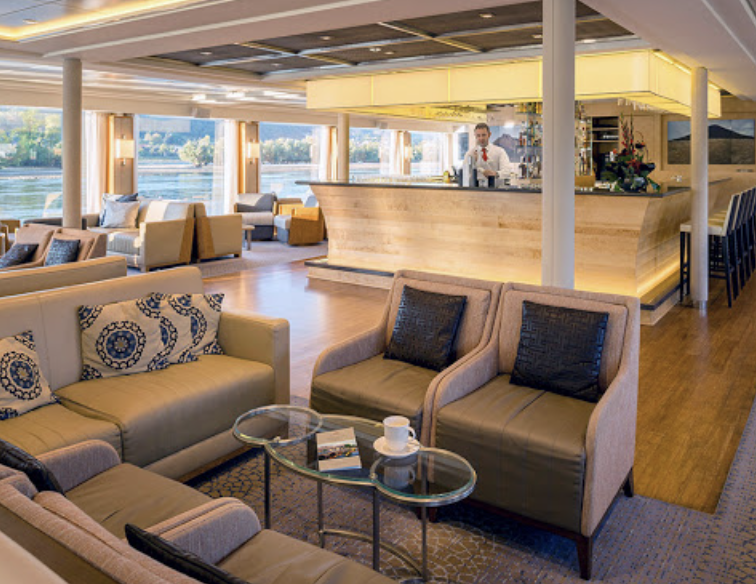
Back aboard, the Lounge provides space for destination briefings, lectures, cultural programming, conversation, and low-key evening entertainment. There is no attempt to reproduce the scale of an ocean resort. Instead, included excursions, enrichment, comfortable gathering spaces, and the constantly changing view create the rhythm of the voyage.
Eir captures one of the strongest advantages of European river cruising: travelers do not simply arrive at a sequence of destinations—they can watch one region gradually become another. For guests drawn to architecture, history, wine country, and scenic travel, the ship provides an understated platform from which the Rhine itself can command much of the attention.

 Viking Eir





 Mange your Bookings