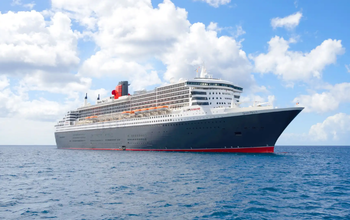

Queen Mary 2 is not simply another large cruise ship in Cunard’s fleet; it is the last true ocean liner in regular passenger service. Its identity is tied to the North Atlantic, where the ship was built to cross open ocean between North America and Southampton with the strength, speed, and stability required for a traditional Transatlantic Crossing. That distinction gives the voyage a different character from a port-heavy cruise. The crossing itself becomes the destination, measured in sea days, formal evenings, lectures, music, dining, and the gradual change of time zones as the ship moves between continents. Cunard notes that Queen Mary 2 remains the only ocean liner offering regularly scheduled Transatlantic Crossings between New York and Southampton. The ship’s scale supports that purpose. Queen Mary 2 measures approximately 1,132 feet in length and was built by Chantiers de l’Atlantique in France. Its long hull, reinforced construction, powerful propulsion, and service speed of about 26 knots reflect the needs of an ocean liner rather than a conventional resort ship designed mainly for calm-weather cruising. The result is a vessel that feels substantial, formal, and deeply connected to maritime history.
Life onboard unfolds at a slower and more ceremonial pace than on many modern ships. Days at sea may include enrichment lectures, planetarium shows, literary events, live music, fitness classes, Afternoon Tea, ballroom dance lessons, spa treatments, deck walks, and quiet time in the lounges. The absence of daily port calls on a crossing gives guests time to settle into the ship, return to favorite rooms, and experience travel as an event rather than a transfer between airports. The Queens Room is central to that sense of occasion. As Cunard’s grand ballroom, it hosts dance lessons, formal balls, live orchestras, and the line’s signature Afternoon Tea. The Royal Court Theatre presents productions, concerts, guest entertainers, and lectures, while Illuminations is one of the ship’s most unusual venues, functioning as a lecture hall, cinema, and planetarium. This gives Queen Mary 2 a cultural personality that suits long sea days, especially for guests who enjoy enrichment and performance as much as restaurants and lounges.
Dining follows Cunard’s traditional accommodation-based structure. Britannia guests dine in the Britannia Restaurant, while Britannia Club passengers have their own dedicated restaurant. Princess Grill and Queens Grill guests dine in private Grill restaurants with a more personalized style of service and greater flexibility. This structure preserves the formality and hierarchy historically associated with ocean-liner travel while still allowing guests to choose casual and specialty options throughout the ship. Cunard highlights Queens Grill, Princess Grill, Britannia Club, Britannia Restaurant, Kings Court, room service, and Steakhouse at The Verandah among Queen Mary 2’s dining choices. Kings Court serves as the ship’s flexible casual dining venue, offering buffet-style meals during the day and a more varied atmosphere in the evening. The Verandah provides a specialty steakhouse experience for an additional charge, while the Golden Lion offers a traditional pub setting with familiar British dishes, drinks, quizzes, and live sport. Café Carinthia, Sir Samuel’s, the Champagne Bar, the Commodore Club, and the Chart Room give guests several different places for coffee, cocktails, wine, conversation, and music without relying on one central entertainment district.
Queen Mary 2 also includes one feature that makes it especially distinctive: kennels on selected Transatlantic Crossings. Guests traveling between Europe and North America may be able to reserve kennel space for dogs or cats, subject to availability and voyage eligibility. Cunard states that kennels can be booked only on selected Transatlantic Crossings and require a valid cruise booking, making this one of the few passenger-ship options for travelers who want to cross the Atlantic with a pet. Outdoor spaces are designed around ocean travel rather than constant poolside activity. The promenade deck allows guests to walk beneath open sky and feel the scale of the Atlantic, while the Lookout and Observation Deck provide broad views from high on the ship. Pools, whirlpools, deck seating, and sheltered areas give travelers several ways to spend time outside, but the experience is less about resort-style activity and more about watching the sea, reading, walking, and enjoying the rhythm of the crossing.
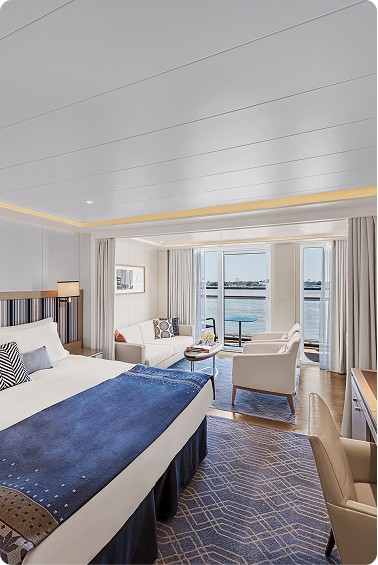
Accommodations range from Britannia Inside, Oceanview, and Balcony staterooms to Britannia Club rooms and Princess and Queens Grill suites. The largest Grill accommodations provide expansive living areas, enhanced service, and private dining privileges, while Britannia categories offer a more accessible way to experience Cunard’s flagship. Many staterooms are designed for longer voyages, with practical storage, comfortable seating, and a more traditional decorative style than the brighter interiors found on newer ships. Wellness facilities include Mareel Wellness & Beauty, a fitness center, pools, whirlpools, spa treatments, salon services, and spaces for relaxation. The ship also offers a library, shops, casino, art gallery, children’s programming, and a wide range of enrichment activities. This breadth of programming matters on a Transatlantic Crossing because the ship must sustain the entire vacation experience across several consecutive sea days.
Queen Mary 2 entered service in 2004 and remains Cunard’s flagship. With a gross tonnage of approximately 148,528, capacity for roughly 2,695 guests, and more than 1,200 crew members, it is both larger and more ocean-focused than Cunard’s other ships. Its maximum speed is about 30 knots, with a service speed around 26 knots, supporting its role on the North Atlantic. Queen Mary 2 is best suited to travelers who want the journey itself to feel meaningful. It is ideal for guests who enjoy sea days, formal evenings, lectures, ballroom dancing, traditional service, and the romance of arriving by ship rather than by plane. While it also sails cruises and world-voyage segments, its most authentic expression remains the Transatlantic Crossing, where the ship’s design, heritage, and daily rhythm come together in a way no ordinary cruise ship can fully duplicate.

 Queen Mary 2


 Mange your Bookings