There are plenty of people who love traveling but have never seriously considered a cruise. They book beautiful hotels, care about where they eat, enjoy a good spa, like having somewhere quiet to relax, and want to explore interesting destinations. Then someone mentions taking a cruise and the first image that comes to mind is an enormous ship with waterslides and thousands of people around a crowded pool.
That is exactly why Explora Journeys is interesting.
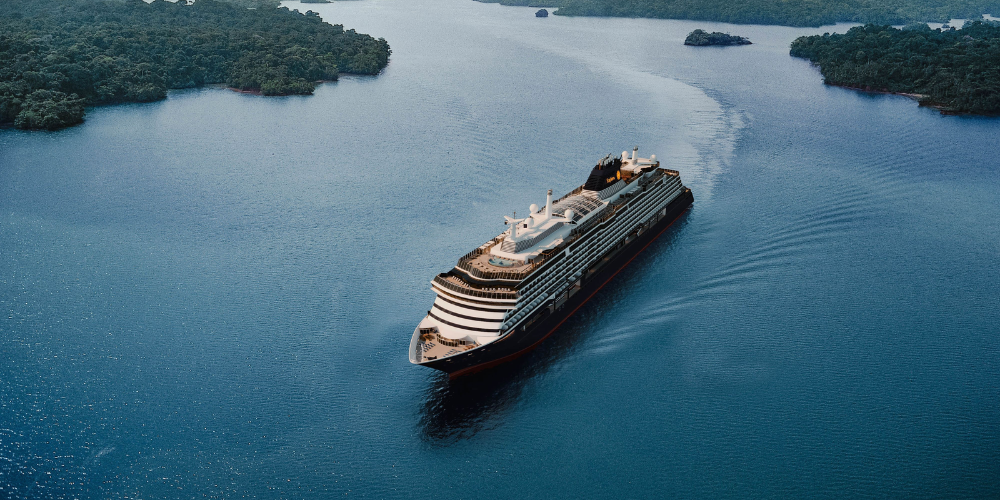
The easiest way to understand the concept is to forget about the traditional image of cruising for a moment. Think more along the lines of an upscale oceanfront resort that moves overnight. You still have ports, excursions,
pools, restaurants, entertainment, and all of the other things that make this a cruise, but the atmosphere is built much more around space, good food, privacy, wellness, and having the freedom to decide how you want to spend your day.
For someone who normally prefers luxury hotels to giant resorts, that can make the idea of going to sea feel completely different.
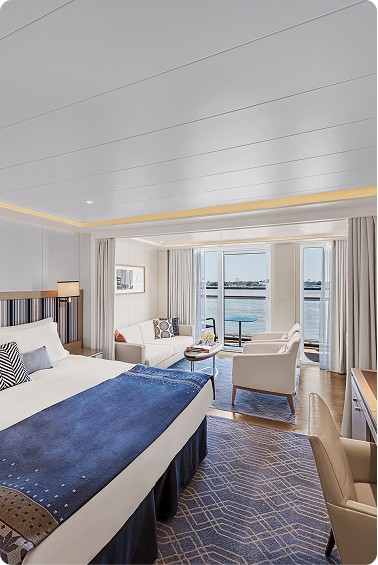
The Suite Is Somewhere You May Actually Want to Spend Time
Accommodations are one of the first clues that this is trying to provide a different type of vacation.
Instead of beginning with a small interior cabin, accommodations are ocean-front suites, and private terrace space is an important part of the design.
That changes your relationship with the room.
On some cruises, people genuinely use the cabin for little more than sleeping, showering, and changing clothes. Here, I can easily imagine ordering something in, sitting outside with coffee in the morning, coming back early from a port and spending an hour on the terrace, or simply closing the door and enjoying some privacy.
That becomes even more valuable on a longer trip. After ten or fourteen days, having somewhere comfortable that actually feels like your own space can make a noticeable difference.
It Feels More Like a Hotel Than a Floating Attraction
Walk around one of the ships and the emphasis is not on creating the largest possible central attraction.
The spaces are spread out in a way that encourages people to find their own corner. There are pools, outdoor decks, lounges, bars, restaurants, wellness areas, and places where you can simply sit without necessarily participating in anything.
I think that is important because luxury does not always mean adding more.
Sometimes it means having enough room that you do not feel crowded.
It also means you can spend part of an afternoon doing absolutely nothing without feeling as though the ship is constantly reminding you about the next activity.
Dining Is Designed Around Choice
Food plays a large role in the experience, but I would describe the appeal as variety rather than simply "fine dining."
You can have completely different evenings without leaving the ship. Maybe one night you want something Mediterranean, another evening you feel like Asian flavors, and another night you simply want a steak and a glass of
wine.
The major culinary experiences are included, although there are select premium experiences and items that cost extra.
What I like about that setup is that dinner does not have to feel repetitive on a longer journey. You can also eat when it makes sense for your day rather than structuring the entire afternoon around a traditional assigned dining time.
If you spent the day exploring and want a later dinner, that flexibility is nice. If you came back early and are hungry, you are not waiting around simply because the schedule says dinner happens at a particular time.
Drinks Being Included Changes More Than the Bill
A broad selection of wine, Champagne, spirits, beer, cocktails, soft drinks, specialty coffees, teas, and other beverages is part of the standard experience.
Of course, that has financial value.
But I think the bigger difference is psychological.
You are not constantly reaching for a room card and wondering whether another coffee, glass of wine, or cocktail is part of a package. You simply order what you want and continue with your evening.
There are premium selections that can still cost additional money, but you can have a very complete vacation without feeling as though the original fare was simply an admission ticket that unlocked another list of things you now need to purchase.
Wi-Fi and gratuities are handled as well, which removes a few more small things from the end-of-trip bill.
Wellness Fits Naturally Into a Sea Day
Access to the thermal area and certain group wellness and fitness activities is included, which makes the spa side of the ship feel more like part of the experience.
Treatments themselves are still an additional expense, so I would not arrive expecting every massage to be complimentary. But being able to use the thermal facilities without buying another pass is a nice distinction.
I especially like the idea after a busy port day.
Imagine spending most of the morning walking around Athens, returning to the ship in the afternoon, spending some time in the thermal area, going back to your suite to relax, and then having dinner later that evening.
Not every hour of a luxury vacation needs to contain another scheduled event.
The Mediterranean Makes a Lot of Sense Here
The Mediterranean is one of the regions where this type of travel becomes particularly attractive.
A single journey can take you between completely different cultures, cuisines, and landscapes without requiring you to pack your suitcase every other day. You might spend one day exploring Barcelona, another walking through a historic Italian city, and another relaxing somewhere along the Greek coast.
Then you come back to the same suite every evening.
That is one of those advantages of cruising that becomes easy to overlook. Imagine trying to recreate the same itinerary entirely by land. You would be checking out of hotels, catching trains or flights, moving luggage, and checking into another hotel repeatedly.
Here, you go to dinner and the transportation happens while you sleep.
But Do Not Choose a Journey Because the Ship Photographs Well
This is probably the easiest mistake to make.
The suites look beautiful. The restaurants photograph beautifully. The pools, outdoor spaces, and lounges can make it very easy to become focused entirely on the vessel.
I would still choose the itinerary first.
Look at where you are actually going and how long you have there. A late departure can give you time to have dinner ashore. An overnight can completely change the way you experience a city. A shorter port day may mean deciding between two attractions rather than trying to see everything.
I would also look at the embarkation and disembarkation cities. If the journey starts in Barcelona and finishes in Rome, for example, I would seriously consider spending a couple of nights at either end rather than treating those cities merely as airports and cruise terminals.
If you are flying that far, you might as well enjoy being there.
The Pace Is Part of the Luxury
Luxury is sometimes described entirely through objects: nicer sheets, better wine, larger rooms, expensive finishes.
I think time can be just as important.
Having time for a long breakfast matters. Not having to race through dinner matters. Sitting outside for an hour without feeling as though you should be somewhere else matters.
That slower rhythm becomes especially noticeable during sea days.
Instead of looking at a sea day and wondering what you are going to do for twelve hours, it becomes an opportunity to enjoy the ship you paid for. Sleep later. Have coffee. Use the spa. Sit around the pool. Have lunch when you feel like it. Read something. Take a nap.
You do not need to return from vacation exhausted to prove that you used every minute correctly.
Families Can Travel, but I Would Think About the Children First
Unlike an adults-only experience, families can travel here, and that opens the door to some interesting multigenerational vacations.
However, I would still think carefully about what younger travelers actually enjoy.
If your children or teenagers are happiest when there are enormous waterslides, arcades, amusement attractions, and organized activities happening all day, I would probably look at a ship built specifically around that kind of family vacation.
If your family already travels internationally, enjoys nice resorts, likes exploring together, and does not require constant entertainment, the conversation is different.
The important thing is not assuming that expensive automatically means appropriate for everyone in the group.
Longer Port Stays Can Be More Valuable Than Another Attraction Onboard
This is something I would pay close attention to while comparing itineraries.
Having additional time ashore can change the entire day.
If you know the ship is staying late, you do not necessarily have to rush back after an afternoon excursion. You might have time to walk around, find somewhere for dinner, or simply experience the destination when the daytime crowds begin to thin.
That is particularly appealing in Europe, where so many destinations come alive in the evening.
I would rather have extra time in a city I traveled thousands of miles to visit than another attraction onboard that I could have experienced almost anywhere.
Shore Excursions Are Something to Budget For
One thing first-time luxury cruisers should not assume is that every part of the vacation is automatically included simply because the fare is higher.
Excursions are generally an additional expense.
That can actually give you more flexibility because you are not paying for a package of tours you may not want, but it needs to be part of your budget.
I would not automatically purchase an excursion in every port either. Some destinations are perfectly enjoyable to explore independently, while others make much more sense with a guide or arranged transportation.
Spend the money where it improves the day.
If the attraction you want to visit is far from the port or difficult to reach, an organized excursion can remove a lot of stress. If the ship docks somewhere that puts you within easy reach of restaurants, shops, historic areas, and public transportation, exploring independently can be one of the best days of the trip.
This Is Where Non-Cruisers May Finally Understand Cruising
I think this may be the most interesting part of the concept.
Imagine someone who normally books a luxury resort. They want a beautiful room, good restaurants, a spa, attentive service, nice outdoor spaces, and somewhere comfortable to relax.
Now take that resort and move it to a different destination while they sleep.
Suddenly the appeal of cruising becomes much easier to understand.
You are not necessarily choosing between a cruise and a resort anymore. You are getting many of the things you enjoy about a resort while also waking up somewhere new.
That does not mean everyone is going to love it. Some people simply prefer staying in one destination and exploring it deeply, and there is nothing wrong with that.
But if the reason you have avoided cruising is because the traditional image of a cruise ship never appealed to you, this is one of the experiences I would look at before deciding that cruising simply is not for you.
The best way to choose is not by asking whether it is luxurious enough. Look at the itinerary, suite, dining, inclusions, pace, and how you normally spend a vacation.
If those pieces already resemble the trips you enjoy on land, having the ocean outside your window may simply be the bonus.
Vacations To Points can help you compare journeys, suites, destinations, airfare, current offers, and the overall cost of your vacation before you make your first reservation.


 Mange your Bookings