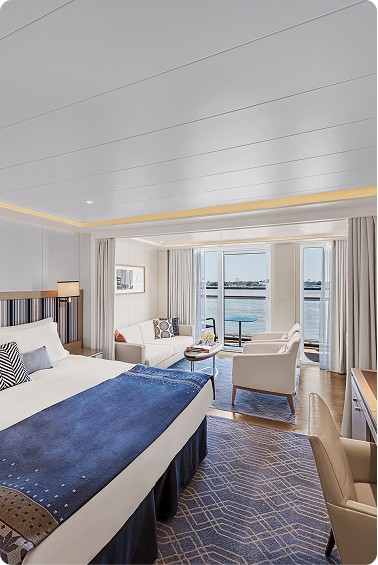
There is an interesting point between the enormous resort ships and the very formal image some people have of luxury cruising, and that is where Oceania tends to make sense. The ships are smaller, food receives considerably more attention, itineraries can be wonderfully destination-heavy, and the atmosphere is polished without making you feel as though every evening needs to become a formal occasion.
For someone taking a first cruise, this can be a completely different introduction to life at sea. You are not boarding a ship designed around waterslides, roller coasters, huge crowds, and activities every fifteen minutes. Instead, the experience is much closer to having a comfortable small hotel carry you between interesting places while still giving you plenty to enjoy when you come back onboard.
That distinction is important because I often hear people say they are not interested in cruising when what they really mean is that they are not interested in one particular type of cruising.
I Would Start With the Map
Before I spend much time comparing cabins, I would look at where the ship is actually going.
There are itineraries throughout the Mediterranean, Northern Europe, Asia, Alaska, Australia and New Zealand, South America, and other parts of the world. The routes can also be quite port intensive, which is something I personally like when I have traveled a long distance to see a region.
If you are considering Mediterranean cruises, look beyond the number of countries on the itinerary. Pay attention to how much usable time you have in each destination. Arriving at 8:00 in the morning and leaving at 10:00 at night gives you a completely different experience from a ship that departs in the middle of the afternoon.
Overnights are even more interesting. They give you a chance to have dinner ashore, experience the city in the evening, or simply stop worrying about rushing through everything before the ship leaves.
Those are details I would prioritize over whether one ship has an additional lounge or another swimming pool.
Food Is Part of the Reason People Come Back
You cannot really discuss this experience without spending some time on dining because it plays such a large role onboard.
The difference is not simply having multiple restaurants. Plenty of cruise ships have those now. What stands out is that dining feels integrated into the overall vacation rather than being treated primarily as another attraction or upsell.
Specialty restaurants are included, which gives you more freedom to try different venues without deciding whether tonight's dinner is worth another charge.
That appeals to me because food is already part of the way many of us experience a destination. If I spend the afternoon trying something local in Italy or France, I do not suddenly stop caring about food when I get back aboard the ship.
Dinner can be one of the relaxing parts of the day rather than something you rush through before the next activity.
A Smaller Ship Feels Different After a Busy Day Ashore
Size is something first-time cruisers often underestimate.
On a very large ship, getting from one side to the other can involve long corridors, multiple decks, elevators, crowds, and a surprising amount of walking. There is nothing inherently wrong with that, particularly when the ship itself is part of the attraction.
But imagine that you have already spent seven hours walking around Rome.
Coming back to a more manageable ship suddenly feels pretty good.
The public spaces can feel calmer simply because fewer people are sharing them. Finding somewhere to sit with a coffee or a drink is part of the experience rather than another event you need to plan.
This can be particularly appealing to travelers who normally prefer boutique hotels to giant resorts.
The Price Needs Context
One of the easiest mistakes when comparing cruises is placing two advertised fares beside each other and assuming the cheaper number represents the less expensive vacation.
Cruising does not always work that way.
Specialty dining, Wi-Fi, gratuities, nonalcoholic beverages such as coffees, teas and sodas, and other amenities are included within the current fare structure. Depending on the particular offer and booking program, there can be additional benefits as well.
That means I would build out the entire vacation before comparing prices.
How much are you going to spend on Wi-Fi elsewhere? Are you going to pay for specialty restaurants? What about gratuities? Drinks? Excursions?
Add the things you realistically plan to purchase and then compare the totals.
Sometimes the mainstream cruise will still cost considerably less, and that is perfectly fine. The important thing is making a real comparison rather than assuming the number on the first page tells the entire story.
The Dress Code Should Not Intimidate You
People sometimes see beautiful dining rooms and smaller upscale ships and immediately start worrying about formal nights.
I would not let that scare you away.
The atmosphere is polished and you will probably want to look presentable in the evening, but this is not about filling half of your suitcase with formal clothing you are going to wear once.
I think smart, comfortable evening clothing makes much more sense. You can come back from a day ashore, shower, change, and enjoy dinner without feeling as though you need to prepare for a black-tie event.
That is especially helpful on an international trip because the more unnecessary clothing you pack, the more you are dragging through airports and hotels before the cruise even begins.
Sea Days Can Actually Be Very Enjoyable
On a destination-focused itinerary, people sometimes treat sea days as wasted time.
I would not.
A sea day gives you permission to sleep later, have a leisurely breakfast, enjoy the ship, sit outside, spend time at the spa, have a long lunch, read, take a nap, or do almost nothing at all.
After several consecutive ports, you may be surprised by how much you appreciate it.
This is another reason I look at the entire itinerary rather than simply counting how many ports are included. Ten destinations in ten days sounds fantastic until you realize you are setting an alarm every morning and walking several miles a day.
Sometimes a day in the middle to recover makes the second half of the trip considerably more enjoyable.
Asia Is Where the Smaller-Ship Style Gets Interesting
If you are considering Asia and the Indian Ocean, I would pay particular attention to the actual route and port times.
Asia can involve long distances between major destinations, unfamiliar transportation systems, and ports that are not necessarily right in the center of the city advertised on the itinerary. A day labeled Bangkok, for example,
requires a little more planning depending on where the ship is berthed.
Longer stays become especially valuable in places where getting from the port to the attraction you actually want to see takes time.
I would also resist the urge to book a full-day excursion every single day. Asia can be sensory overload in the best possible way. After several busy days of temples, markets, city tours, unfamiliar food, and long transfers, having a slower afternoon can be exactly what you need.
Your Cabin Matters More on a Longer Trip
If you are considering a ten-, fourteen-, or twenty-night voyage, I would spend more time thinking about the cabin than I would for a quick weekend trip.
You are actually going to live there for a while.
Look at the deck plan and see what is above and below you. Think about how far you want to be from elevators and public areas. Decide how much you value having outdoor space.
A veranda can be wonderful, but I would still think about the itinerary. On a very port-intensive trip where you leave early every morning and return late in the afternoon, you may spend less time there than you expect. On a longer voyage with several sea days, that private outdoor space can become considerably more valuable.
There is no universal correct cabin. The best one is the one that matches the way you expect to use it.
You Do Not Need an Activity Every Hour
This is where someone coming from a giant resort ship may notice the biggest change.
There is entertainment, music, enrichment, lounges, and plenty of ways to spend your time, but the ship does not feel as though it is constantly trying to get your attention.
I actually think that is part of the appeal.
You can have a drink before dinner, enjoy a long meal, see some entertainment afterward, and then decide whether you want another drink or simply want to go to bed.
After spending all day exploring somewhere new, not having another twelve things you are supposed to do can feel surprisingly luxurious.
If you need constant high-energy entertainment, however, you should know that about yourself before booking.
Consider the Airfare Before Falling in Love With the Itinerary
This is a practical detail that I think people sometimes leave until too late.
A beautiful itinerary may begin in one city and end somewhere completely different. That can be fantastic because you get to experience more of the region, but it also means you may need an open-jaw or multi-city flight.
I would check that before making the final decision.
If you are traveling internationally, I also prefer arriving at least a day early. Two nights is even better when the embarkation city is somewhere worth exploring.
The hotel costs a little more, but it gives you protection against flight delays and gives your body some time to adjust before you start a busy itinerary.
This Is a Good Example of Why "I'm Not a Cruise Person" Does Not Mean Much
If your idea of cruising is a ship carrying several thousand people with waterslides, pool games, constant announcements, and a huge entertainment schedule, you may genuinely dislike that type of vacation.
But cruising is much broader than that.
There is another version where you spend most of the day exploring, return to a smaller ship, have a great dinner, enjoy a comfortable evening, sleep, and wake up somewhere new.
You unpack once. Your hotel moves with you. You avoid airports and trains between every destination, and you still get to experience several different places during one vacation.
For someone who already enjoys food, boutique hotels, international travel, and a slightly slower pace, that can be a very natural introduction to cruising.
Before booking, I would choose the itinerary, understand the inclusions, look carefully at the cabin, and make sure the onboard atmosphere sounds like somewhere you would actually enjoy spending your evenings.
That tells you much more than simply asking whether Oceania is a "good" cruise line.
Vacations To Points can help you compare Oceania Cruises, ships, itineraries, accommodations, airfare, and current offers before making your reservation.


 Mange your Bookings