Cruising has evolved far beyond large ships sailing between popular tourist destinations. Today, travelers choose between traditional cruises built around resort-style entertainment and expedition cruises that reach some of the world's most remote wilderness destinations.
As demand for immersive travel grows, understanding the differences is essential—because the right choice depends entirely on your travel goals, budget, and what kind of experience you want.
What Is an Expedition Cruise?
An expedition cruise is a small-ship voyage to remote destinations—Antarctica, the Arctic, Galápagos—focused on wildlife, education, and guided exploration ashore.
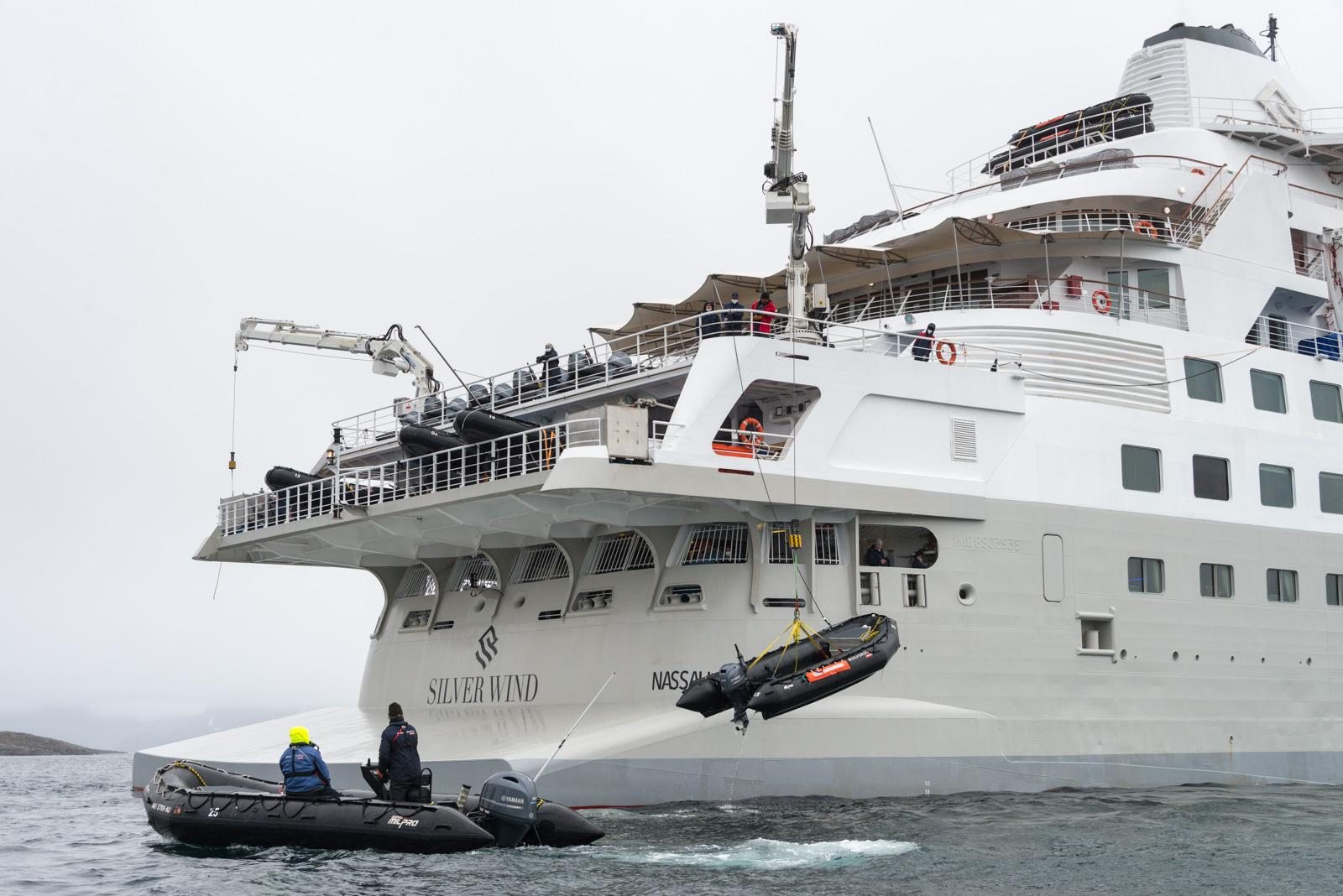
Unlike mainstream cruises, expedition vessels typically carry between 100 and 300 guests and are purpose-built to navigate challenging environments: polar ice, shallow fjords, and remote archipelagos that larger ships cannot access. Guests participate in Zodiac excursions, guided shore landings, and lectures from on-board naturalists, marine biologists, and conservation experts.
The focus is discovery, not entertainment. Most guests describe expedition voyages as among the most meaningful travel experiences of their lives.
What Is a Traditional Cruise?
A traditional cruise is a large-ship vacation combining resort-style amenities, entertainment, and multi-port itineraries—typically in the Caribbean or Mediterranean.
These cruises are operated by major lines and feature extensive onboard facilities: multiple restaurants, Broadway-style shows, water parks, casinos, spas, and nightclubs. Ships can carry anywhere from 2,000 to more than 7,000 passengers. For many travelers, the ship itself becomes the primary attraction—a floating resort that happens to stop in interesting ports along the way.
Traditional cruises offer exceptional value and are especially popular with families, groups, and first-time cruisers.
What Are the Key Differences Between Expedition and Traditional Cruises?
|
Feature |
Expedition Cruise |
Traditional Cruise |
|
Ship size |
100–300 guests |
2,000–7,000+ guests |
|
Destinations |
Remote wilderness, polar regions |
Caribbean, Mediterranean, Alaska |
|
Shore access |
Zodiac landings, no ports required |
Established port infrastructure |
|
Onboard focus |
Education, lectures, wildlife talks |
Entertainment, dining, shows |
|
Excursions |
Kayaking, hiking, wildlife observation |
City tours, beach trips, shopping |
|
Price range |
$4,000–$15,000+ per person (7 nights) |
$800–$2,500 per person (7 nights) |
|
Wildlife focus |
Primary draw |
Occasional, not the focus |
Where Do Expedition Cruises Go That Traditional Ships Cannot?
Expedition cruises reach remote, protected destinations with no port infrastructure—places most travelers will never otherwise visit.
Because expedition vessels are small and purpose-built, they can access:
- * Antarctica — the world's most protected wilderness, limited to vessels with strict IAATO environmental certification
- * Svalbard and the High Arctic — polar bear territory above 78° north
- * The Northwest Passage — the legendary Arctic sea route through the Canadian archipelago
- * Greenland's fjords — accessible only by small ships and Zodiac tender
- * The Galápagos Islands — Ecuadorian-regulated itineraries limited to small expedition vessels
- * The Kimberley, Australia — remote coastal wilderness accessible only by sea
- * South Georgia Island — one of the world's greatest wildlife concentrations, with no tourist infrastructure whatsoever
Traditional cruise ships visit established ports in developed destinations. Expedition itineraries go to places where the ship is the only way in.
What Is the Onboard Experience Like on an Expedition Cruise?
On an expedition cruise, the onboard program centers on learning and preparation for the next landing—not entertainment.
Instead of theatrical shows, guests attend daily lectures from the ship's expert team: glaciologists explain ice formation before a calving glacier visit; ornithologists brief guests before a seabird colony landing; historians provide context for indigenous sites. Evening recaps review wildlife sightings and plan the following day.
The atmosphere on expedition ships is collaborative and informal. With fewer than 300 guests, most passengers know each other by day three. The crew-to-guest ratio is typically higher than on traditional ships, enabling more personalized experiences ashore.
Traditional cruises, by contrast, offer the full resort experience: live performances, theme nights, specialty dining, casinos, swimming pools, and organized social events across multiple sea days.
What Shore Excursions Do Expedition Cruises Offer?
Expedition shore excursions center on active, immersive access to natural environments—Zodiac landings, kayaking, hiking, wildlife observation, and photography in wilderness settings.
Because many expedition destinations have no port or dock, guests board inflatable Zodiac boats directly from the ship to reach shore. This is not an inconvenience—it's what makes access possible at all. A typical day might include:
- * A 7:00 AM Zodiac landing at a penguin colony
- * A guided hike to a glacier viewpoint
- * An afternoon kayak among icebergs
- * A late-evening wildlife watch from the deck
Traditional cruise excursions typically include city tours, beach days, cultural experiences, and shopping trips in established tourism destinations. These are well-organized and convenient, but the wildlife and wilderness access they offer is categorically different.
What Wildlife Can You See on an Expedition Cruise?
Expedition cruises provide direct, close-range wildlife encounters with species in their natural habitat—impossible to replicate on a traditional cruise.
Depending on the itinerary, guests may observe:
- * Antarctica / South Georgia: emperor and gentoo penguins, leopard seals, humpback and minke whales, wandering albatrosses
- * Arctic / Svalbard: polar bears, walruses, Arctic foxes, bearded seals, reindeer, ivory gulls
- * Galápagos: giant tortoises, marine iguanas, blue-footed boobies, Galápagos sea lions, hammerhead sharks
- * Alaska (small ship): brown bears, humpback whales, orcas, Steller sea lions, bald eagles
On a typical South Georgia expedition, guests encounter multiple species on each of the four to six daily Zodiac landings. Wildlife observation is not a bonus—it is the entire point of the voyage.
Traditional cruises may include whale watching or dolphin spotting, but sustained, close-range wildlife encounters are rarely the primary purpose.
Who Should Choose an Expedition Cruise?
Expedition cruises suit adventure travelers who value wildlife encounters, remote destinations, and small-ship intimacy over resort-style entertainment.
You are likely an expedition cruise traveler if you:
- * Dream of visiting Antarctica, the Arctic, or the Galápagos
- * Prioritize meaningful, educational experiences over onboard activities
- * Prefer a smaller, quieter, more intimate environment
- * Are comfortable with early mornings, outdoor conditions, and physical activity ashore
- * Want to come home having seen something truly rare
Many guests describe their first expedition voyage as a turning point—a before-and-after experience that changes how they think about travel.
Who Should Choose a Traditional Cruise?
A traditional cruise is the better choice for travelers who want a social, resort-style vacation with entertainment, convenience, and family-friendly programming at strong value.
Traditional cruising is ideal if you:
- * Travel with children or in a large group
- * Want a wide variety of dining, entertainment, and onboard activities
- * Prefer familiar, developed destinations with easy port access
- * Are a first-time cruiser looking for a lower-commitment introduction to cruising
- * Are working within a tighter per-person budget
Traditional cruises deliver outstanding value. A 7-night Caribbean cruise can cost as little as $800–$1,500 per person including accommodation, meals, and entertainment—a difficult price point to match on land.
Are Luxury Expedition Cruises Worth the Cost?
Luxury expedition cruises are worth the cost for travelers who prioritize exclusive wildlife access and remote destinations over onboard entertainment.
The higher price—typically $4,000–$15,000+ per person for a 7-night voyage—reflects several real cost factors:
- * Specialized vessels: purpose-built ice-strengthened hulls, Zodiac fleets, and expedition equipment
- * Expert expedition teams: scientists, naturalists, historians, and wildlife specialists who lead every landing
- * Remote logistics: fuel, permits, and provisioning for destinations far from commercial infrastructure
- * Environmental compliance: IAATO certification, waste management systems, and permit fees in protected areas
- * Small passenger capacity: fewer guests per voyage means less revenue to spread fixed costs across
Crucially, most luxury expedition cruises are highly all-inclusive. Guided landings, Zodiac excursions, alcoholic beverages, Wi-Fi, gratuities, and specialist lectures are typically bundled into the fare—costs that would be significant add-ons on a traditional cruise.
For travelers for whom Antarctica or the Galápagos is a genuine bucket-list destination, the investment is rarely regretted.
Are Expedition Cruises Environmentally Responsible?
Leading expedition operators follow strict environmental protocols—many are held to higher standards than any other form of tourism in the world.
The International Association of Antarctica Tour Operators (IAATO) governs access to the Antarctic Peninsula, enforcing rules that include:
- * A maximum of 500 passengers ashore at any one site simultaneously
- * Only vessels carrying fewer than 200 passengers may visit the most sensitive sites
- * Mandatory pre-landing biosecurity checks to prevent invasive species transfer
- * Strict wildlife approach distances enforced by guides on every landing
Modern expedition vessels increasingly incorporate energy-efficient hybrid or diesel-electric propulsion, advanced waste management systems, and responsible fuel practices. Several operators have committed to net-zero emissions targets by 2030.
This level of environmental accountability is a meaningful differentiator from mass-market cruising.
How Fast Is the Expedition Cruise Industry Growing?
Expedition cruising is the fastest-growing cruise segment, with passenger volume up 71% between 2019 and 2023, per CLIA's 2024 State of the Cruise Industry Report.
The broader cruise industry is also recovering strongly. Global passenger volume reached 34.6 million in 2024, up from 31.7 million in 2023. But within that growth, expedition and exploration cruising is outpacing every other segment as travelers increasingly seek immersive, meaningful experiences over passive tourism.
New purpose-built expedition ships continue to enter service from operators including Hurtigruten, Lindblad Expeditions, Quark Expeditions, Aurora Expeditions, and Ponant—signaling long-term industry confidence in demand.
Expedition Cruise or Traditional Cruise: Which Should You Choose?
Choose an expedition cruise if you want wildlife, wilderness, and once-in-a-lifetime access to remote destinations. Choose a traditional cruise if you want entertainment, family-friendly convenience, and strong value.
Choose an expedition cruise for:
- * Wildlife encounters in Antarctica, the Arctic, or the Galápagos
- * Remote destinations unreachable by large ships
- * Educational, immersive, small-group experiences
- * A voyage that changes how you see the world
Choose a traditional cruise for:
- * Resort-style entertainment and dining variety
- * Family travel with children
- * Multiple port visits in developed destinations
- * Strong value at $800–$2,500 per person
For travelers who have always wanted to stand among a penguin colony in Antarctica or watch polar bears from a Zodiac in Svalbard, no traditional cruise itinerary offers an alternative. Expedition cruising exists precisely for those experiences—and for the travelers willing to seek them out.
If you're weighing both options, Vacations to Points can help you compare itineraries, navigate pricing, and find the right fit for your travel goals—whether that's a Caribbean resort cruise or a polar expedition to Antarctica.


 Mange your Bookings